
Navigating A Crashed World System
As the Postwar Era enters terminal winter, an epic rat scramble has begun. Forget everything you thought you knew about international affairs: a brave new world awaits

Earth Forces Bulletin 26-5
This month, Earth Forces Bulletin shifts format going forward. While each post will typically include a topical section, I’ve decided that there is value in these monthly posts more directly tracking important geopolitical developments.
An all-out rat scramble that has begun, a chain reaction involving whole countries reassessing their place in the world. It’s a once-per-century sort of radical evolution that will trickle down to everyone.
The nature of the beast, unfortunately. Though academic types might refer to the world system in an entirely theoretical sense, the systems science and theory traditions I work with defines it as a very real material thing. Relationships between countries managed by elite cliques looking after their own interests first.
Every so often, most of what was once considered certain common knowledge about how the world of geopolitics operates is suddenly upended. The Napoleonic Wars in nineteenth century Europe, World Wars of the early twentieth century, and what seems like a ceaseless tide of rising conflicts today all share the same essential characteristics.
A lot is changing too quickly for existing institutions to cope. They’re breaking under stress, forcing communities and whole countries to rapidly adapt.
Those price increases at the gas pump and grocery store you’ve noticed lately, pretty much wherever you are? Harbingers. Vital signs.
Long before climate apocalypse or robot revolution can pose a real threat, the collapse of the Postwar Order is set to overwhelm the world. Stands to get real ugly. Most of our countries are unable to protect their people now.
The news isn’t all bad, though. In fact, many incredibly unjust and deeply harmful institutions may be burned away very soon. But this is the sort of thing that nobody escapes wholly unscathed.
With a bit of luck, most will only feel the pain in their bank account. They won’t have to go through what Ukrainians have. And a lot of Iranians caught between the IRGC and its enemies. The people of Gaza and Lebanon, too.
Existing classical structures you learn about in college like state and society will not protect communities at large from the consequences of this mess. It’s these high-level systems that are responsible for it in the first place. They’ve stagnated under a generation of bad management, with bitter results.
That’s why the emphasis of Earth Forces is protection at the community level. Identifying ways small groups can survive and thrive. The backbone of a free world is communities that can adapt to anything, seize whatever opportunity comes their way.
But working out how to get this done demands at least a basic understanding of the coming storm. What makes it go, and where it may hit the hardest.
So first comes an overview of international affairs, then I’ll turn briefly to a concise description of the deep science of it all. Because it’s sometimes useful to take the temperature before discussing the causes of the weather.
Regional Breakdown - May 2026
This part of the monthly brief splits the planet’s trouble spots into four core regions. Note: this is not a comprehensive outline of all geopolitical trouble spots across the globe. Only a guide to the high level stuff and how different conflicts may interact.
Apologies to all the more localized issues out there, but the bulk of the damage is being done by a few countries working in four broad zones: Europe, Indo-Med, Pacific, and Americas. There is obviously some overlap here, but some players are also present in multiple places, so it’s a fair balance.
The biggest of these is the poor USA. Barring a major reversal in the course of the Iran War, this really is turning into the USA’s very own Suez moment.
The veneer of superpower has been shattered… again. I don’t think another example will be needed to get the point across.
While US leaders can be counted on to reject reality almost indefinitely, powers around the world are reconsidering their position. The process is irreversible and irrevocable. The American Century is done and dusted.
This is nothing to get upset about - for Americans or allies abroad. The thing never worked as billed anyway. If it did, half of Americans wouldn’t be living to paycheck to paycheck while a third barely stay a step ahead and a lucky tenth or so reap the rewards of the massive big tech AI bubble, betting on massive debt-funded bailouts when it pops.
I am no isolationist. Just a critical realist. And the bulk of the evidence leads me to conclude that it’s better for everyone now if the Americans just go home. This country does more harm than good and needs to get its own house in order before doing anything but sell stuff to other people. If there’s anything the country even makes that isn’t an over-hyped piece of junk.
Iran was able to hit and badly damage an F-35 it wasn’t even supposed to be able to detect. Small surprise that the US bombardment of Iran was paused soon after. What would a generation of paid shills do if Iran actually filmed some wreckage?
Other countries might go with Gripens, Rafales, or Eurofighters. Or Korean KF-21s. Lockheed-Martin shareholders would be so sad. Until the bailout came.
Europe
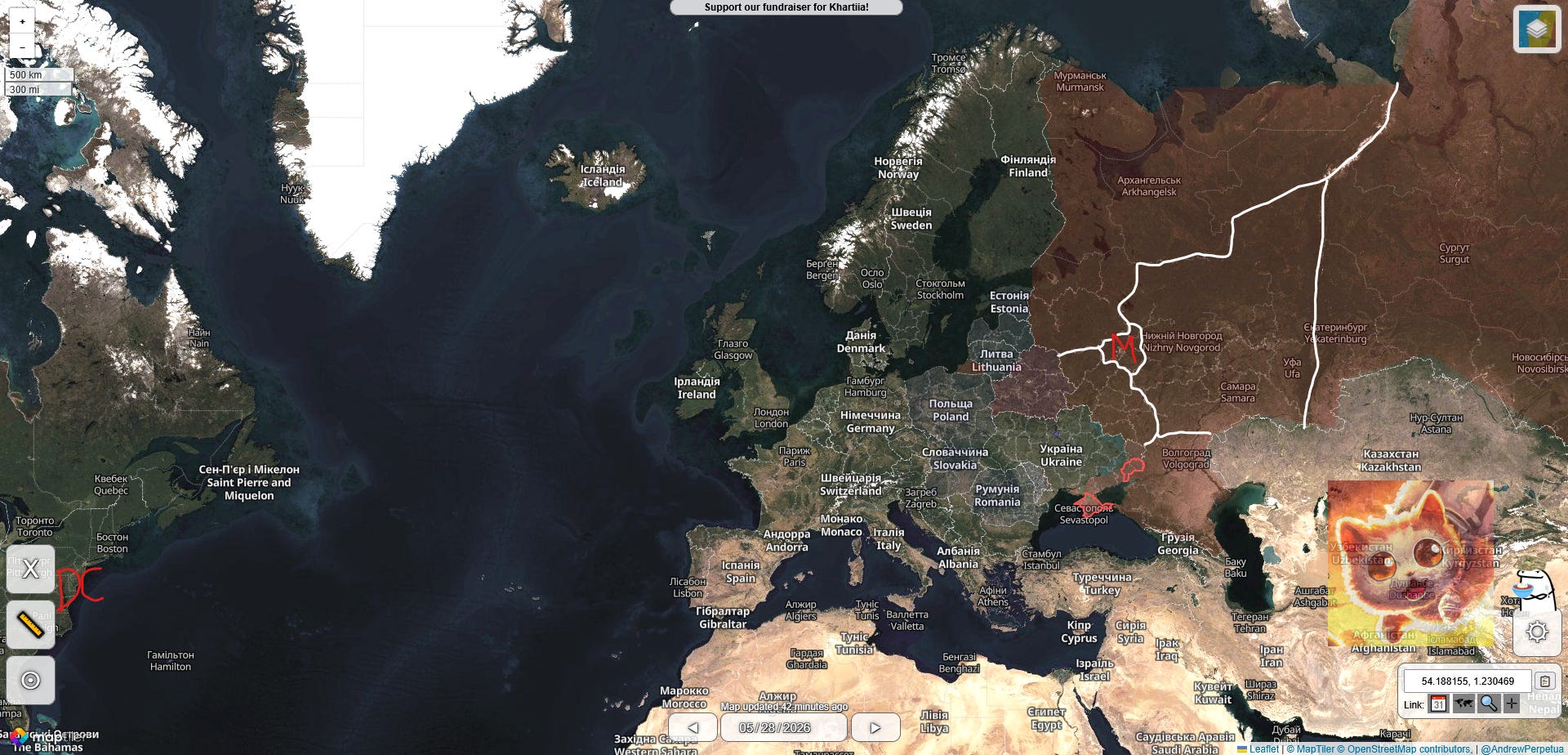
The Ukraine War remains Europe’s most pressing structural concern, and thanks to the USA shooting itself in the foot multiple times since 2022 Europeans are now on the path to true autonomy. Or rather, a resumption of the freedom of action lost after Europe’s empires imploded during the World Wars.
In broad terms, Europe was the primary source of geopolitical misery on the planet for several hundred years. The outcome of the World Wars was a continent broken by its own internal squabbles to the point that a pair of daughter social orders, ruled from D.C. and Moscow, took up the mantle global governance.
Not out of kindness, but necessity. Chaos is scary, therefore dangerous, because it breeds itself.
For the last eighty years, Europe has avoided spending nearly as much money on security as was traditional. There hasn’t been a period of such relative peace on the continent in centuries. The whole world was better off for it.
There is, then, a certain cruel irony in seeing Europe rediscover that it is in fact strong. That around half a billion people loosely united in an economic, social, and increasingly political union means as much latent military potential as the USA.
This week, France and Norway just announced that France’s nuclear deterrent covers Norway. Sweden and Ukraine are set to confirm the delivery of Gripen fighters by early 2027, with joint production of the newest model creating more by 2030. European cooperation with Ukrainian industry forced to ramp up and become more resilient guarantees a low-cost production base married to technology tested in the fires of all-out war.
If you ever wondered why a clique of Americans including a notable subset of the tech community are so keen on declaring Europe under attack by immigrants and not russia, wonder no more. Whole con is a bid to undermine Europe to protect America’s tech industry, because under the surface, it’s dangerously hollow.
Europe faces manifold internal challenges, political, social and economic. But what counts in times like these is where a country happens to be in its adaptive cycle. The USA has been struggling for a long time, russia too - but not as long as Europe. It’s in the early days of a bounceback, situated to capture substantial capital flows once US retreat from the Middle East and Europe are further advanced.
Europe’s fundamental weakness is in fact the source of its long-term resilience. As a fractious, diverse geographic space welded together by a shared history of mutual misery, there’s always a solution to any problem hiding somewhere in the fabric. Ukraine is best seen as a microcosm of Europe, Ukraine’s strength on the battlefield a leading indicator of where Europe as a whole is heading.
In the short term, of course, Europe is still having to scramble to keep up with events. The situation in the Middle East is very bad for most European economies. Even if the USA accepts that there’s no military option that will achieve Trump’s goals short of a bloody invasion and ceases fire, the damage done to global oil and fertilizer supplies so far is bad enough.
But while this shock will drive capital to the US in the short run, the ongoing destruction of every pillar investors used to rely on to power their bet on the US being a safe haven for assets is set to drive diversification down the line. US borrowing costs are bound to rise, and when the great AI con falters too much, the snapback promises to hurt American assets more than most.
In short, despite an all-out war raging on one flank and US shenanigans screwing up global supply chains Europe needs operational, the chaos itself destroys the USA’s most precious asset: the perception that it will always act in its own clear self-interest eventually. That, and the autonomy of the federal reserve. As both die, volatility of a kind not seen in the US for probably a hundred years will return. Some will profit, many others won’t.
Indo-Med
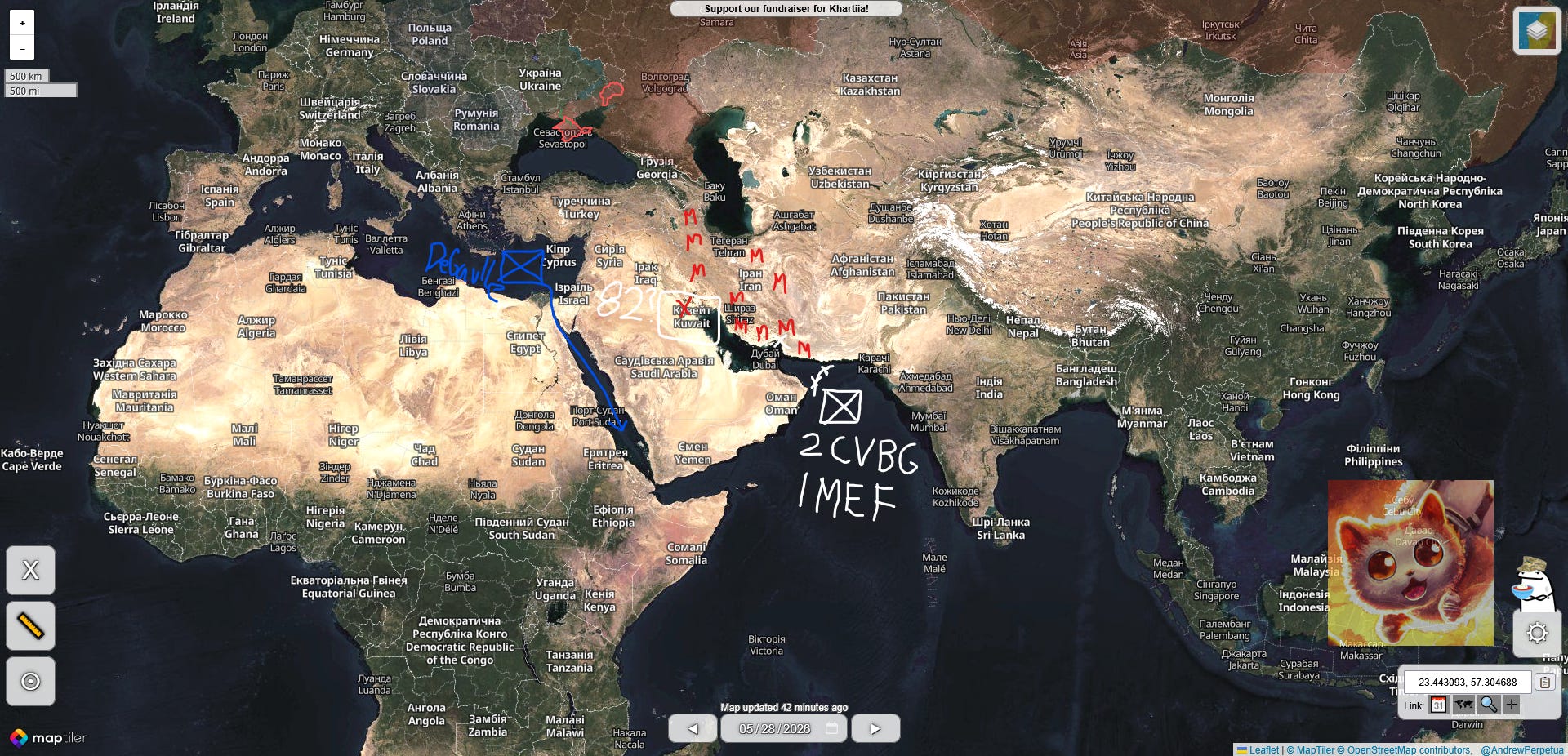
Trump’s badly bungled assault on Iran may wind up being as big of a historic foul-up as Putin’s attempt to destroy Ukraine. The past few days indicate that an inflection point is near.
Exchanges of fire are common right before a ceasefire. Everybody jockies for position until the very end. So the US hitting Bandar Abbas while Iran goes after a base in Kuwait - all part of the game.
Ideally, the reported agreement about an agreement that puts off most salient issues will pan out. Unfortunately, if it does, that will mean Trump is admitting to a public humiliation. To losing.
He’ll always declare whatever he does brilliant and amazing, so there’s reasonable hope that he’ll be satisfied with the tired act of insisting he won over and over while glaring hard at anyone who dares to say otherwise. Guy really is an elderly patriarch at Thanksgiving dinner lecturing the family and expecting to be thanked for his wisdom.
However, the reported deal doesn’t come anywhere near either Trump’s previously stated expectations or that of the idiots who pushed him to go with war in the first place. They’re trying to get him to renew the fighting and go all-in on hitting Iranian infrastructure Putin style by saying that he’s too chicken to get the job done.
Who will win out - the cowards egging Trump on, or the sane people who understand that there’s nothing the US can really do to the IRGC that it hasn’t already - except nuke them? Which would be an admission of defeat in and of itself, same as with Putin.
Have to say, the IRGC is playing this game much better than Trump. They even switched to announcing a deal after weeks of constantly nixing a statement of Trump’s about peace being imminent when he was just gaming the markets. These dudes are pushing the guy’s buttons with gleeful abandon and getting away with it.
The purported deal grants no real concessions to the US position. It is essentially a test of whether Trump wants an actual deal at all by making him commit to a process for negotiating the real thing. While giving him plenty of time to screw it up, resetting everything back to square one. If he says yes and breaks the deal, he’s what the Iranians thought. If he says no, they can assume he’s been planning to resume fighting all along, and is only waiting for the right moment or pretext to strike.
There have been a lot of reports in the media over the past couple weeks about Netanyahu being angry at Trump, of Trump being sick of the war and just wanting it to be over. They could be authentic, yet the tone and even frequency are so similar that it feels like another attempt to make IRGC leaders think they’re safe.
On the whole, here’s where I see the state of play standing in the Iran War:
Iran expects Israel and the USA, probably also the UAE, to launch another round of strikes. Israel wants at least two to three years before having to do this again. USA might possibly even make good on repeated threats to seize some islands.
Pakistan’s deep involvement in mediating a truce suggests a grave fear of being drawn in, especially if a ground attack on Hormuz is involved. This should rule it out thanks to the risk of Baloch separatism, highlighted by a recent terror attack.
Pentagon types are torn between awareness of how vulnerable US forces and allies still are, along with the real risk of totally exhausting ballistic missile interceptor and precision standoff weapon stocks for little strategic gain, and the humiliation of having lost another war in every sense that actually matters.
Gulf countries other than the UAE just want this to end, even if Iran controls Hormuz, and will seek to stay out of any renewed fighting. They seem to have successfully used the Hajj pilgrimage to delay another round of fighting. That ends this week, so the weekend could be intense.
Both Iran and the USA are trying to make the other abandon the ceasefire first if fighting does start up again. That sustains a chance of maintaining the fragile status quo long enough that Trump wanders off to attack Cuba. However, Israel can blow the whole thing up at any time, and Netanyahu has plenty of incentive to do exactly that.
Beyond Iran, the region remains a mess perpetually on the verge of something much worse. Israel is probably lucky that the IRGC stands to become permanently entrenched across Iran, because the insanity that has gripped the country will otherwise lead to a war with Turkiye - a NATO member.
The IRGC, if it’s smart, will use this war to make a hard nationalist pivot, sidelining the mullahs. Increasing civil liberties is probably necessary to mollify urban Iranians, who tend to be on the reform side. If there’s anything like a settled postwar scene, an economic boom during reconstruction along with social liberalization could wind up making the IRGC popular, the mullahs becoming scapegoats in time.
Trump now stands to go down in history as the guy who saved Iran’s regime by trying to kill it. Idiot. What’s even more stunning to me is that the D.C. national security machine managed not to see this coming.
For many years now, the sequence of events in any war with Iran was almost bound to be:
Overwhelming initial US-led airstrikes and lots of great TV-ready footage.
Iran shoots missiles - more recently, drones too - at all US bases in range and Israel, seeking to demonstrate the ability to inflict unacceptable damage.
If threatened enough, Iran also closes Hormuz by laying mines and attacking a few ships. Global insurance companies handle the rest.
Iran works to sustain enough missile and drone launches to offset US claims of dominance, while setting ambushes aiming to down US aircraft. Even a few losses forces shifts in tactics, like using only long-range weapons which can themselves at times be shot down.
A frustrated US eventually realizes that Iran is too big to fully control, declares victory, and does a deal to get out.
Yet somehow, despite decades of simulations, modeling, logic, study, debate, wargames, analysis, and what have you, the D.C. system failed to make Trump do the rational thing and skip straight to step 5 after lots of threats and a series of limited attacks. Hatred of Iran runs so deep among some Americans of a certain age that we had to go through the damn motions. Getting thirteen Americans and thousands of Iranian civilians killed in the process.
What’s truly pathetic is that the USA would do the exact same thing all over again in Iran or somewhere else if it weren’t the British Empire circa 1956. If not the USSR right around 1988.
Looking beyond Iran - Israel is still prosecuting its forever war against any who dare oppose Israeli might, especially if they’re in the way of some settlers. Ceasefires in Gaza and Lebanon? Yeah, not so much.
The Israelis are, unfortunately for them, learning the hard way that it takes just a few months for a Hezbollah fighter to become skilled at using fiber-optic FPV drones. Which can take out Israeli Merkava tanks even though many are equipped with active protection systems these days.
Most likely because these are tuned to hit incoming missiles, which fly much faster. If you don’t lock out slower-moving things picked up by the system’s radar, you kill a lot of poor birds. Or friendly infantry running past. Not ideal.
The Israelis are expanding their invasion of Lebanon, though, testing to see if Iran will throw Hezbollah under the bus. Not sure it would matter, because Israel is back into a guerilla war, taking a few casualties every week on into eternity.
Israel’s brand of self-delusion hit a real fever pitch this week when a politician servicing the settler lobby decided to preside over Israeli forces abusing people taken from that silly annual flotilla stunt which never gets to Gaza. One brand of performative politics met another in this sorry incident, with the Israelis demonstrating for the whole world to see that the only way to support the people of Gaza is by cutting a path to them through the Israelis with a whole lot of drones.
It would be more than deserved, honestly. How many people does Israel have to kill for the rules to apply to it, too?
Sorry Israel, but this whole taking vengeance for the Shoah on Palestinians thing you’ve gotten into is beyond absurd. If you went back in time and had a chat with Adolf Hitler about setting up the state of Israel, dirtbag would have been a card-carrying Zionist.
Within a generation, nobody is going to care when Israel really does get destroyed. Probably in a civil war. Zionism has become about putting Jewish people everywhere into a cage, claiming to represent their interests while actually reifying every antisemitic stereotype that puts them in danger.
It’s a truly perverse dynamic. And tough to see how it ends, when every day Israelis remind Palestinians that they’re seen as no better than cattle.
No, I’m not Jewish, so technically I’m not allowed to comment. But being of an ethnicity doesn’t make you special, no matter how much your favorite teacher, religious authority, or talking head on TV. Start doing stuff like sexually abusing some poor useless demonstrators moved by pity more than common sense, there will be consequences.
Warning, not threat, for the moral censors out there (yes, they’re coming, even to Substack - just wait). That is all. I would not comment on or care about Israeli affairs at all if it weren’t for the federal government of the USA giving Israel my family’s tax dollars.
East of Iran, Pakistan’s situation is worth a brief note. While dealing with the risk of the Iran War spilling over thanks to Iran and Pakistan both housing a large and often restive Baloch minority population, Islamabad is also still waging a low level war against Afghanistan. This is taking the form of episodic exchanges of fire, including Pakistani airstrikes on Kabul, and attacks on border posts. No suggestion on it ending soon, either.
Pakistan is also, of course, forever staring down India. That makes all the fighting happening on Pakistan’s western borders so concerning. Islamabad is prone to seeing everything as part of a plot by New Delhi. And after suffering a minor black eye in their exchange of fire last year, it seems that India almost immediately turned to building better relations with Afghanistan.
There’s no specific news worth highlighting, just an area it’s always worth keeping an eye on. If you’re independently interested, or have investment exposure, anyway. A part of the world that is always waiting to throw a nasty surprise, like September 11, 2001.
India is in an intriguing geopolitical position these days, analytically speaking. In the throes of an anti-Muslim, socially conservative movement that sees India as being for Hindus alone, India has lately been caught funding the murder of Sikhs abroad who advocate for freedom from one of the world’s more artificial countries.
Not to knock India there. The place is extremely diverse and still badly affected by the legacy of British rule, which is why India and Pakistan aren’t still one country. Though the experience wasn’t entirely negative - it all depended on where you stood. Different groups were empowered by London, others disempowered, and independence didn’t resolve tensions that had built up across decades of imperial control.
As proved the case in nearly every other country that ever gained independence from a colonial occupier - the USA included - the people who ran the show after independence had been officials in the colonial regime. A certain kind of experience really helps when you’re trying to manage the inherent anarchy of anything as complicated as a country after being looted by Europeans on an extended Viking raid.
India’s challenges resolving the longstanding divides between groups of people who have to share a densely populated chunk of real estate help demagogues like Modi use minority groups as scapegoats, same as anywhere else. The serious tensions within India have been obscured by a determined effort to ignore them on the part of most world leaders.
Why? Because India isn’t aligned with anybody but India, so everyone can do business in a low-regulation, low labor cost environment. It’s too big for it to be otherwise, despite certain US pretensions. For over a decade, a set of US experts were determined to pull India into a pact with the USA, Australia, and Japan to hem in China. Like so many other vapid imperial projects, Trump has inadvertently blown up the Quad with his tariffs and restrictions on certain kinds of visas.
India is open to everybody except China - more because of existing tensions than US prodding - and many countries take full advantage. India buys discounted russian oil and what military exports Moscow can still sustain, then exports artillery shells to Ukraine. India may be hostile towards Muslims at home, but India buys huge volumes of oil and gas from the predominantly Muslim Middle East - even Iranian, where US sanctions can be evaded.
The relationship with China is always frosty (no pun intended, sincerely) because of a long and ill-defined border in the Himalayas and until fairly recently being direct competitors for labor-intensive or industrial exports. It could thaw some, given the geopolitical uncertainties of the day.
The antagonism between China and India stems in no small part from China’s military aid to Pakistan. Yet this is a deeply structured relationship where neither side shows any signs of seeking a final resolution. Chinese involvement actually serves to stabilize the relationship, given that a large proportion of Chinese shipping traffic passes through the Indian Ocean, which India physically dominates.
Under conditions of mutual assured destruction, everyone has a good reason to behave. India, like most of the post-colonial world that is so often referred to as the Global South, remains studiously non-aligned. Not likely to intervene to stabilize the world system. But won’t blow it up, either. That’s for russia’s pathetic axis pact reboot with North Korea and Belarus, with the USA and Israel tagging along for fun.
Pacific
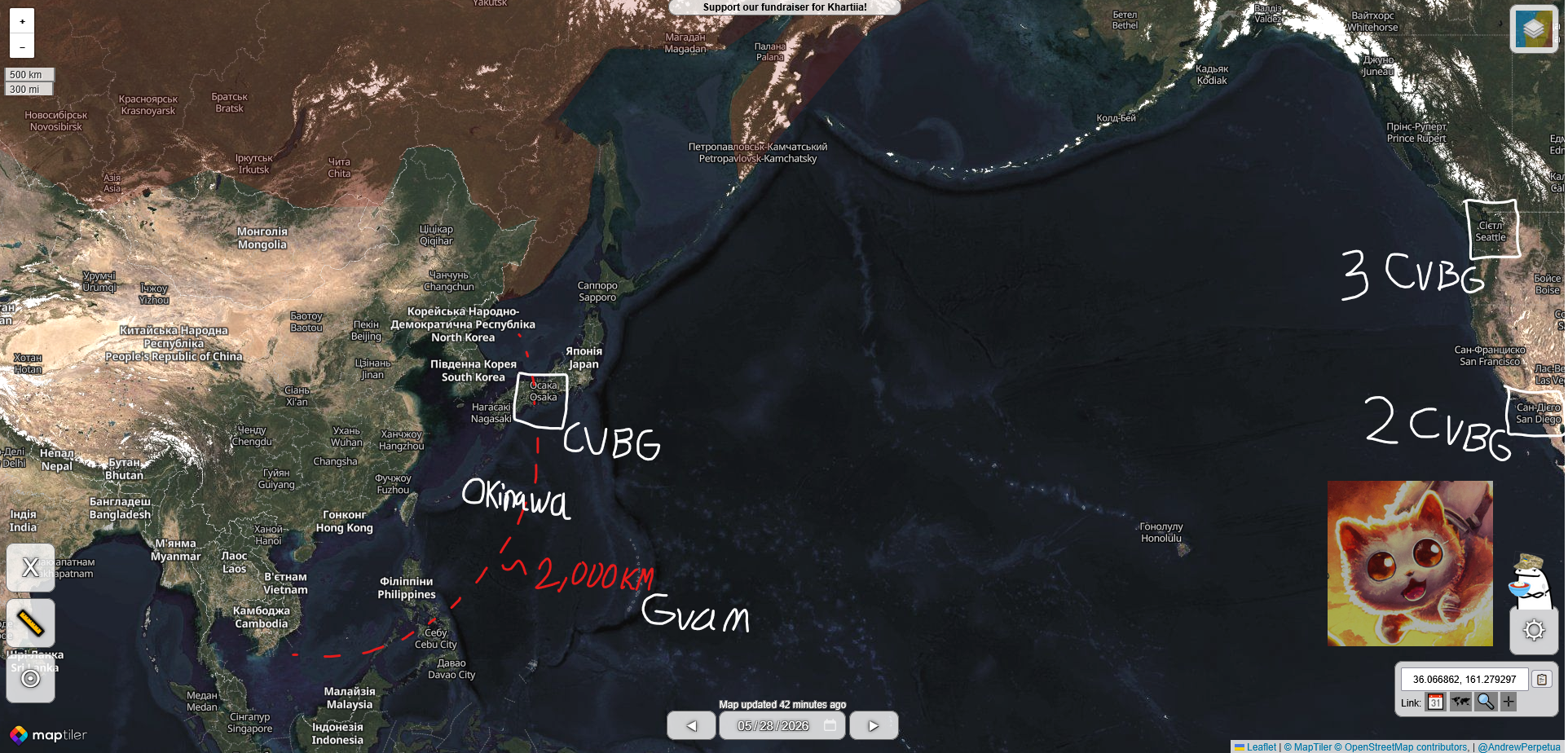
Moving east into the Pacific region, everything becomes all about China in a way it simply never will be on the Atlantic side of the world, thanks to geography. Unless China somehow leads the entire world in developing Earth orbit, which is still very doubtful. That’ll require global partnerships to minimize costs.
A future where China becomes a world-dominating superpower able to swiftly crush anyone not tightly bound to some western military pact is one of today’s most potent and silly myths. Power projection is a function of alliances, bases, and a slew of other institutional factors. Only the USA has ever been able to credibly threaten the level of sustained military pressure on the other side of the world needed to wage all-out war, and that comes down to a unique circumstance: World War Two.
Then, the USA was able to take advantage of the British and French empires being so desperate to move people and kit anywhere it pleased. A global footprint expanded from this foundation across the Cold War and into the twenty-first century, but as it became ubiquitous actually holding on to all of it turned into a matter of consent on the part of people living nearby.
These days, only islands lacking any hard power or close allies can be forced to accept US bases. As the Iran War demonstrated, if US allies aren’t on board with a war, they can make it almost impossible to wage effectively unless it’s near sovereign US territory. US carrier groups do allow for some flexibility in this regard, but their availability is painfully limited.
China isn’t on a path to rule the world, but it does pose a real threat to the Pacific region thanks to the potential for internal dynamics transforming how it approaches security. The USA, unfortunately, has made it increasingly clear that it views the relationship with China in purely transactional terms.
The cost of fighting China is now so manifestly high that selling out Taiwan is considered a viable option in D.C. Just like the Budapest Memorandum that was supposed to shield Ukraine in exchange for Kyiv giving up its inherited Soviet nuclear arsenal evaporated when the first tanks rolled west, expect US legal obligations to aid Taiwan’s fight to be interpreted as sympathetic words and some light arms.
This is the uptake of Trump’s approach to China, codified during his latest trip to Beijing. It’s definitely strange to see the US president go to Beijing under circumstances where the implication is that he needs help with various disasters. Massive inversion of the historical relationship.
While reducing the chances of a war between a fast maturing China and increasingly decrepit USA looks great on the surface, the problem arises when the rest of the Pacific is factored in. Both politically and geographically.
US fears of fighting China over Taiwan stem both from the economic impacts as well as the damage China can do to Guam and everything west of the Marianas. Inability to protect US citizens on sovereign US territory would have just about as much of an impact on D.C. as Moscow’s failure to protect the imperial capitol is Putin’s empire.
China now has a strong degree of reflexive control over D.C., which by extension gives Beijing unprecedented sway over US allies. This will not be borne well, and spells Japan, South Korea, Singapore, Australia, and other core Pacific partners hedging their bets by working together as well as with Europe.
If European interests move swiftly, they will be well positioned to take advantage. South Korea and Japan both have highly sophisticated military complexes, and Seoul at least is big on export deals. With South Korea possessing one of the few non-US anti-ballistic missile systems now proven in combat against Iranian weapons aimed at the UAE, expect deals with European firms soon. Japan is bound to ramp up Patriot interceptor production as soon as licensing agreements are put together and capacity expands.
Give it a few years, and the US military-industrial complex will be facing a rapidly maturing, more flexible, and lower-cost rival powered by Ukrainian data. However, it is now an open question whether new institutions can be built to protect Taiwan. Because if the USA won’t do it, someone has to.
If Beijing does seize Taiwan by force, that will mark a transformation of the thing. Further action against invented enemies abroad must be presumed.
This, given China’s inherent geographic potential, would be very bad. There is already a critical danger of Beijing deciding to make a move on Taiwan as early as this summer thanks to the critical depletion of US anti-missile and precision standoff weapon stocks in the Iran War. Recovery won’t even properly begin until 2028 or 2029.
If politics in the USA get seriously crazy around the elections, both China and russia may decide it’s now or never to make a big move. When the stakes get high, gamblers come out to play.
Even if the USA doesn’t want to fight a war, all it takes is the wrong kind of mistake to force D.C. into one. American leaders are very, very sensitive about any allegation that their precious, expensive military may not have used its resources well. Or being seen to lose to any but a sufficiently European enemy, like Moscow.
Especially after Iran, some US leaders will be out to prove that they have teeth after all. That’s the kind of emotional response which has led the country into a stupid war before. But never one where the risk is so high.
Americas
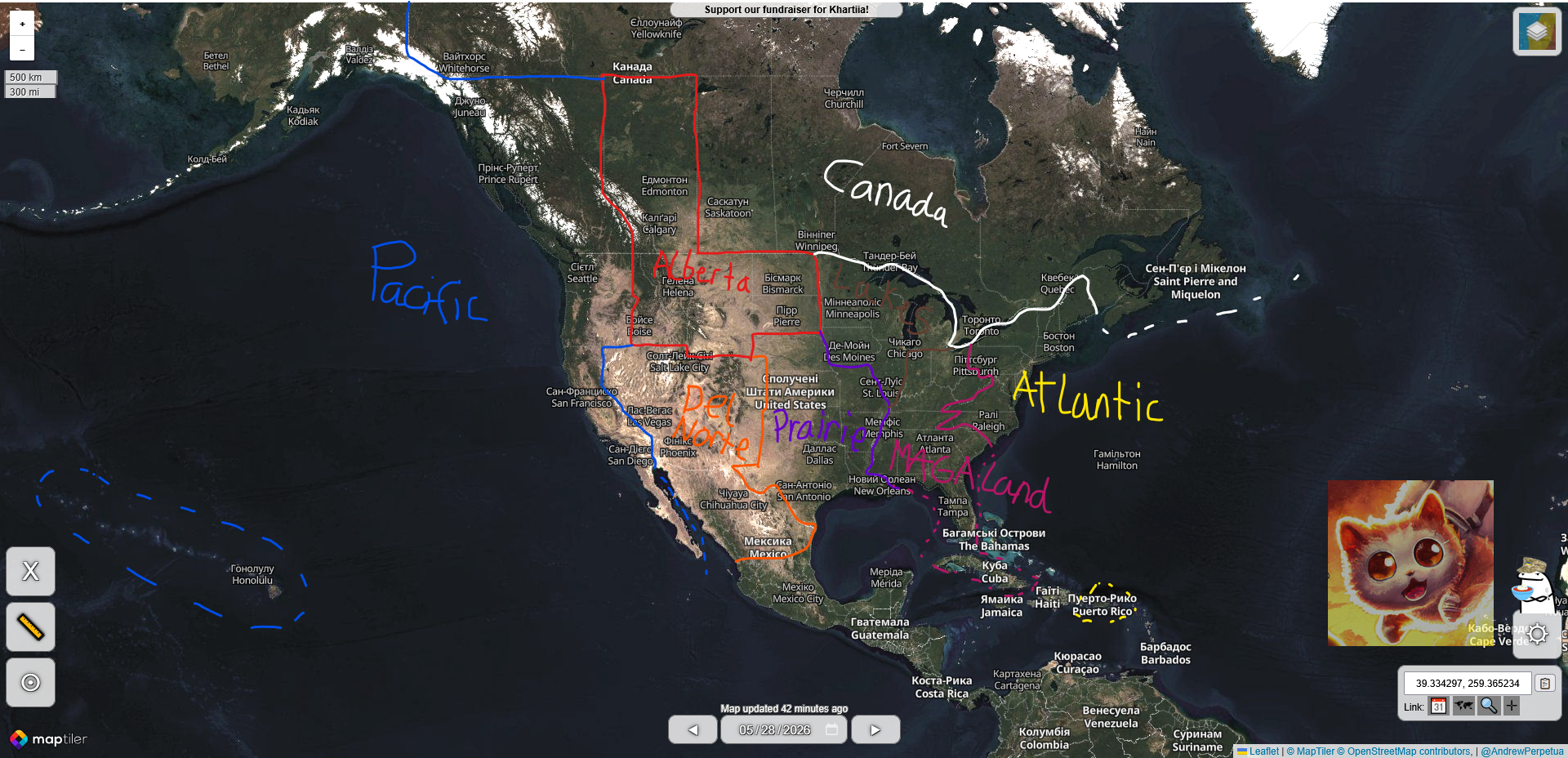
It’s possibly one of the more hopeful signs of these times, if still very consequential in their own way, that some US politicos are becoming so interested in their side of the planet. They are starting to understand that the illusion of strength is more easily sustained by fighting weaker enemies.
Although there’s a degree to which everything Trump is doing now is nothing more than a reboot of all the stuff people once said Reagan did, but with better special effects. The symmetry is so stark that I really have to wonder if the average Trump backer at this point doesn’t actually think it’s still 1985.
Reagan had Grenada, Trump Venezuela - maybe Cuba for dessert. While different countries, in Trumpworld they’re basically the same. Nominally but not really socialist, too weak to fight back in a consequential way, and have sent a lot of refugees to the US whose kids will vote for anybody who pays the regime back.
Trump went after Iran, and Reagan did too. As an extra bonus, Trump was apparently talking about taking Kharg Island way back then. Proving well in advance that he doesn’t understand Iran.
Even Trump’s weird outreach to Putin in Alaska was a crass reboot of Reagan’s meeting with Gorbachev in Iceland. But there was no wall to tear down. Trump is no Reagan, and Putin no Gorbachev. They’re just two thugs running declining powers that cannot under any circumstances admit what’s happening, because as soon as too many people look down, the whole shebang plummets.
So the USA, unable to have its way with tougher foes, can be expected to revert to 19th-century style meddling closer to home. Signals are being sent suggesting action in Cuba soon, though the US these days is imitating the russian habit of promising pain to shake loose concessions without having to fight for them. That USS Nimitz is hanging around the Caribbean on her way to retirement is interesting - wonder if a show of force using a ship at the end of her days is planned.
Whether the Cuban regime will go down firing Shaheds at Nimitz or Florida I really can’t estimate. But even if it does, strikes are unlikely to be systematic, and as much as it would be funny if Mar-A-Lago took a few Shahed strikes. Cuba isn’t Iran. It’s not big, far from the US, or remotely as mountainous. The US may suffer a few bloody noses after underestimating Cuban will to resist. But after adjusting, the power brought down on regime forces will be overwhelming.
More likely than not, though, there will be some deal that purports to give Trump a win but changes nothing on the ground. He’s just trying to look important in the time he has left before it all slips away. End of this year, the new Congress will make his life hell.
The US seems set to continue the silly campaign against alleged drug smugglers in both the Pacific and Gulf of Mexico, unfortunately. And given the way Trump is governing like a joke character from a bad 80’s film, actually launching attacks against cartels in Mexico sounds like exactly where this administration will go before it’s gone.
As to that, it’s fair to use this section to record how far along what looks like a terminal breakup trajectory the USA has gone each month. In early 2029, the combination of yet another close-run election and the MAGA movement hitting a demographic wall as its Boomer core dies off at increasing rates could trigger an explosion.
The half of Americans who are diehard partisans have gone so nuts now that they believe anything their team does is justified. So if a dementia-addled Trump in January of 2029 announces that Marco Rubio’s loss to Kamala Harris was a fraud and he’s declaring a national emergency which extends his term, expect about a third of Americans to still call him President of the USA, Constitution be damned.
If this extends to the military chain of command after four years of Trump acolytes stacking it with loyalists, watch out. Captured institutions will be turned against everyone else. Always are. Why state power must be strictly limited, no excuses, no exceptions.
No Democrat will admit it out loud, because it’s taboo among educated Americans to be the first one to claim that violence is necessary, but if MAGA world goes too far, organized violence is what they’ll provoke. And not from Antifa or any of their usual bugaboos, but ordinary folks in communities who decide that the feds are an occupying force and lock them down nationwide. Do that when more than half the police and federal agents stand aside, and good luck cracking down.
There is a point where rhetoric naturally bleeds into kinetic action, even if educated Americans have been trained to believe otherwise. People can be shocked into accepting that the world has changed, and the rules too. All too easily, unfortunately.
Even Democrats, if facing an actual live coup in D.C., will demand countermeasures in kind. Geography will take over from there.
And contrary to conventional wisdom, the fact that there are MAGA voters even in the bluest cities and diehard woke liberals out in rural Idaho will not alter the tribal reality that dominates American politics and society today. Majorities will rule, formal institutions will kick into gear, and all of a sudden you’ll have groups of states with common political, social, and economic interests forging common bonds. Maybe even deciding that they’re completely new countries.
There is now a greater than outside chance of multiple countries in the Americas fragmenting by 2030. Venezuela, obviously, and Mexico in ways already is. The USA and Canada may yet follow suit.
Consider Albertan separatism in Canada. A significant portion of the local population aims to separate from Canada, with many of them subsequently hoping to join the USA.
As someone who grew up in rural California and lives in rural Oregon, I deeply sympathize with many of the grievances Albertans feel towards their federal government. Any belief that life would be better as part of the USA is deep delusion, because even if the USA does hold together, the constant battle between Democrat and Republican has done nothing but leave rural American places poorer than ever. Republicans may say they care about rural America, but any survey of who puts out pro-Republican signs will reveal that their ranks house a whole lot of huge landowners whose real interest isn’t economics or the land, but joining a national movement.
Logic, unfortunately, rarely enters into actual politics at the ground level. And so the modern American tribal landscape which places rural in the Republican or right-wing camp spills right over into Canada, infecting politics there.
Five years from now, both the USA and Canada could have split into several regions based on geography.
Unlikely? Sure.
The fact that it’s no longer a laughable scenario, but one where the merits are actually worth debating given present conditions, means that the world we knew is gone.
Though when I use the royal we, I should specify what I mean. Not just you gentle readers out there (we’re watching the latest season of Bridgerton right now , I couldn’t resist), but more specifically the community of people who ever studied international affairs.
If you had forecast back in 2005 when I was at Berkeley the world of today, you’d have been laughed off by serious professors as a revanchist conservative or worse. Back then, tragic catastrophes like the Ukraine War were close to an impossibility. Just a lurid thought experiment for the few international relations scholars who delved into deep strategy.
A sort of hobby of mine ever since my undergraduate days was developing a theory of international relations which could bridge perspectives and generate better predictions than you got out of Foreign Affairs, Foreign Policy, or any other wonk-focused outlet.
Thanks to systems theory, and several years of field observations as the Postwar Order burned down around us, I’ve got a pretty decent answer. What links all the conflicts in the regions broken down above? A world system in the throes of metamorphoses.
This is the apocalypse - of the Postwar Order. But in the original meaning of the term, or the Norse equivalent, Ragnaroek (I don’t do accent marks, sue me), that doesn’t really mean the end of the whole world. Just one configuration of power.
It’s up to everyone living today to do their part in building whatever comes after. I consider the most important thing anyone can do is embrace a healthy level of skepticism about everything.
The Nature of the World System
Systems theory and science assist in that. Mainly by creating forcible reminders that it is physical relationships between objects and the flow of signals between them which serve as the real foundation of existence.
Everything is connected by cause and effect, which are brought about by an exchange of energy. This is always scarce in some respect, with the whole structure of the material world defined by where energy settles for as long as thermodynamics allow.
To simplify: the world we experience is built on a vast mosaic of connections. The actions of people, communities, and whole countries are shaped by incentives at every level. They’re always shifting, the churn generating the chaos of life that everyone has to find some means of coping with to get by.
A country is a geographic area where people have lived for a long time under a relatively consistent set of relationships. On a lower level these are shifting all the time, but always within certain bounds. Some call that the social contract, and in all communities on some level is rooted in a guarantee that those who conform to the rules well enough are protected. Treated differently and usually better than outsiders.
Society emerges from the structured interactions of communities, and is inherently artificial. It’s one of the three big systems that together come together to give a country its character, the other two being economic and political.
These systems don’t only exist at the country level, they permeate all the way down to the individual. But less directly and firmly, with community and household level values playing an even stronger role in most individual lives.
All three exist for a reason: people need stuff to live, and membership in bigger systems is a form of insurance. When neighbors are bonded by an agreement that neither should ever go hungry, both are better equipped to survive hard times.
Problem: people being people, getting screwed over is always a risk. So trust is essential. Reputations matter, because they tend to enhance or limit opportunity.
One of the most essential services in human affairs is an organ which can ensure that deals made are kept. Establishing common standards and practices is a way to help enforce deals by setting expectations few are willing to risk defying because of the reputational hazard.
This is where government comes in. Neither market nor society reliably look after the interests of the country as a whole, because both are structurally build on maintaining and leveraging difference. Only a government that broadly represents everyone under a set of consistent rules (hence why real, healthy democracy is a good thing) can bridge inevitable gaps that otherwise threaten to tear the country apart.
Government, though creates its own set of hazards. Who watches the watchers?
The fact of security being something no one can afford to get wrong, and the capabilities attached to any group of people tasked with maintaining security can be abused to hand them a privileged place in society or even government, creates fertile grounds for the formation of what scholars call the state. It’s a kind of super-government which, thanks to the dominance of the ideology of the state in Europe during the years the continent was trying to run the whole world, has been granted by powerful people the right to use violence to secure its interests and control its population.
International law since the Second World War claims to place limits on this right, but has never been reliably enforced, so is essentially a joke. The states with sufficient power to threaten other ones always ignore it.
The state is an ideological system, but that doesn’t make it supernatural or immortal. Most are in fact very weak, using their power principally against the poorer strata of society for the benefit of the wealthy.
Right now, communities across the world are caught between two powerful coalitions of filthy rich oligarch types who aim to secure their interests in the new world. One is desperate to resuscitate the zombie Postwar Order, while the other wants to replace it with a fantasy of how the world worked before the World Wars. With the latter movement’s impetus coming from the dying howl of communities abandoned to their fate and sucking down snake oil to ease the pain, it looks set to be used as the excuse the former lean on to establish a new kind of dictatorship.
A tyranny where if you were able to secure your position during the tough times, it’ll be basically locked in forever. Only a lucky few trained to never question the system will be allowed to gain more status, from which wealth will flow.
Imagine a world where all of your activity is measured and scored against a hidden rubric. All the irritating aspects of social media rendered invisible and used to decide what jobs you can hold or schools you can attend.
All those people talking up how AI might destroy the world, including Pope Leo, are using the associated disruptions to embed the principle that the right people must decide who is “normal” in all policy. Both they and the techno-fetishists that this admittedly kinder and gentler set claims to oppose are linked: the latter used as the stalking horse to scare people into accepting a new harness.
They want all the benefits of the tech world and the right to dispense them to those they deem worthy.
The outcome of this fight between titans looks set to decide a great deal about the structure of the future for generations, much as the end of the World Wars created the basic architecture of the Postwar Order. Awareness of this is already pressing those who can see further down the road to engage in the very rat scramble that guarantees everyone will ultimately wind up exposed.
Funny thing is, there’s a third power out there that both fear, and for very good reasons. It’s the will of the actual majority of people on the planet who want nothing to do with anyone’s historical fantasy cosplay and just hope to get by.
And recent developments, especially but not exclusively in Ukraine, have opened the door to their triumph.
Nobody needs some dipshit Caesar wannabe pretending to rule the world in charge of their country. And communities which invest in the right institutions and infrastructure can tell these bastards where to jump.
That’s what Ukraine has taught the world since 2022. Iran may be doing the same thing now - though there you have a case study in how things could get much worse.
Iran’s leaders may put on mullah robes for show, but the evidence suggests a ruthless commitment not to faith, but raw power. Many states will try to learn from the IRGC’s example as they struggle against the tide of history in the years to come.
When I write about the world system, I’m referring to the mosaic of countries in the world and the state institutions that parasite off them. Each is an independent entity with its own concerns, history, and objectives. But at the same time, all must sustain their existence: they have to tax the population to muster resources, deploy them in a manner that leads to control over space, and not get destroyed by a rival.
All base their actions on expectations about what everyone else is likely to do. While a country is a complex thing, it still tends to exhibit a certain character unique to itself thanks to the details of its construction. The bigger an organization is, the broader and more unwieldy the social contract needed to keep it together. All this lends itself to predictability.
Countries at the international level are, however, creatures of the regime that rules them. A regime is made up of the people who make high-level decisions. All regimes are systems of their own, an assemblage of personalities who come together seeking personal through national gain.
Regimes aren’t inherently good or bad. They vary in their nature based on the distribution of real power they sustain. Good regimes are those that last, which they accomplish by serving the people who depend on them well. The regime generates effective policy and governance, eventually becoming embedded into the fabric of life. It can and should take on a life of its own independent of the people who operate it at any given moment. Democracy is a system for swapping out leaders regularly in general consultation with the public.
Influencing regimes is a big business for obvious reasons, and naturally leads to corruption. It’s what most of the for-profit news media is really about - purporting to be the voice of the people allows the press to hold targets hostage, to a degree. The audience is a kind of captive too.
If you’ve ever formally studied international relations or read foreign policy focused press, the outline of the world system that I’m providing here is bound to be deeply alien. That’s for a reason: the fields associated are deeply influenced by American scholarship, which in the domain of politics is deeply intertwined with a longstanding project to make the USA into a classical state when the Founders clearly meant for it to be a looser federation, coming together only during a foreign attack.
After World War Two, a fairly small clique of insiders who came to call themselves Transatlanticists invested in the idea that the US federal government had to become the center of the world. They intentionally built up a mythology of America to sustain long-term domestic support for binding international engagements.
Once this made a lot of sense, because the danger of global economic chaos after the fighting was over was severe. Eighty years on, the project has become predatory - both abroad and at home. It’s eating itself, and the Constitution, with global repercussions.
Like an invasive weed that reaches the end of its natural life cycle, the USA’s long influence abroad is creating vast exposed patches on the landscape as it falls back. The global conflagration now several years underway is too intense to stop, and stands to erode the USA’s standing steadily for a long time to come.
Communities everywhere need to be wide-eyed about what this process entails. Higher prices, greater uncertainty, more supply chain disruptions, and probably more wars as countries which now realize that all their assumptions about the USA are outdated start testing to see what new ones are justified.
The international landscape really is a kind of ecosystem. Each country occupies a niche and has its own natural trajectory, but finds its options constrained and channeled by the mosaic it is part of. This feeds back on the country’s internal processes, amplifying or dampening trends. Incentives shift, actions change, and then everybody has to recalculate again.
Fortunately, what may seem at times like pure chaos exhibits tremendous structure at a different level. Globally, the future is cloudy. More locally, it depends on geographic fundamentals. Especially the ability and willingness of people in communities to see what’s happening and make moves as opportunity allows.
Anything that can be sustainably localized should be. Abandoning global supply chains entirely isn’t an option, but exposure can be limited. The next decade or so is pretty much bound to see higher electricity and fuel prices, more expensive food, and rapid boom and bust cycles for all kinds of basic commodities.
This is what happens when you decide to start imposing barriers to trade and free movement of labor because it’s easier to blame outsiders for problems than your own leaders. The consequences accumulate. Choices are to dig in and whine louder, or shift gears.
Make more renewable energy. Rebuild local food systems that produce food and fertilizer together - lots of beautiful countryside, too. And start working out how to leverage drones and other Network Age tech to replace services that might not always be there when you need them. Plenty of it is already proven in Ukraine.
Conclusion
I think that’s enough for this month, though obviously a deeper dive into the theory of international relations I’ve outlined is justified. Probably boring for most, though.
Still, lots going on in the world with a lot of relevance and implications, and the knowledge base needed to get at the dynamics of what’s happening is not as easy to get across as pop history.
Doesn’t help matters that there are a lot of people out there who equate any substantial change with the end of the world. Proclamations of doom are a whole lot easier to generate than solutions. They’re also a cop-out: part of the game. People insist that everything is doomed when they really want to force someone to take an option already on the table but set aside, typically for good reason. Or they’re doing propaganda.
My aim with Earth Forces Bulletin is to establish architecture. If enough people around the world know what’s up and that what needs to be done is clear, the fact that it all takes years to bear fruit doesn’t matter. When hard times come for a community, reserves of innovation will out.
Like so much else you can take to the bank, this truth has been proven in Ukraine. Paid for in blood. Lest we forget. Seems like a gift it would be a tremendous insult to squander.
Be back in June with an assessment of what’s happened in the world after the closure of Hormuz turns four months old. How many more refineries will the russians have lost between now and then, I wonder?
And Ukrainian land?